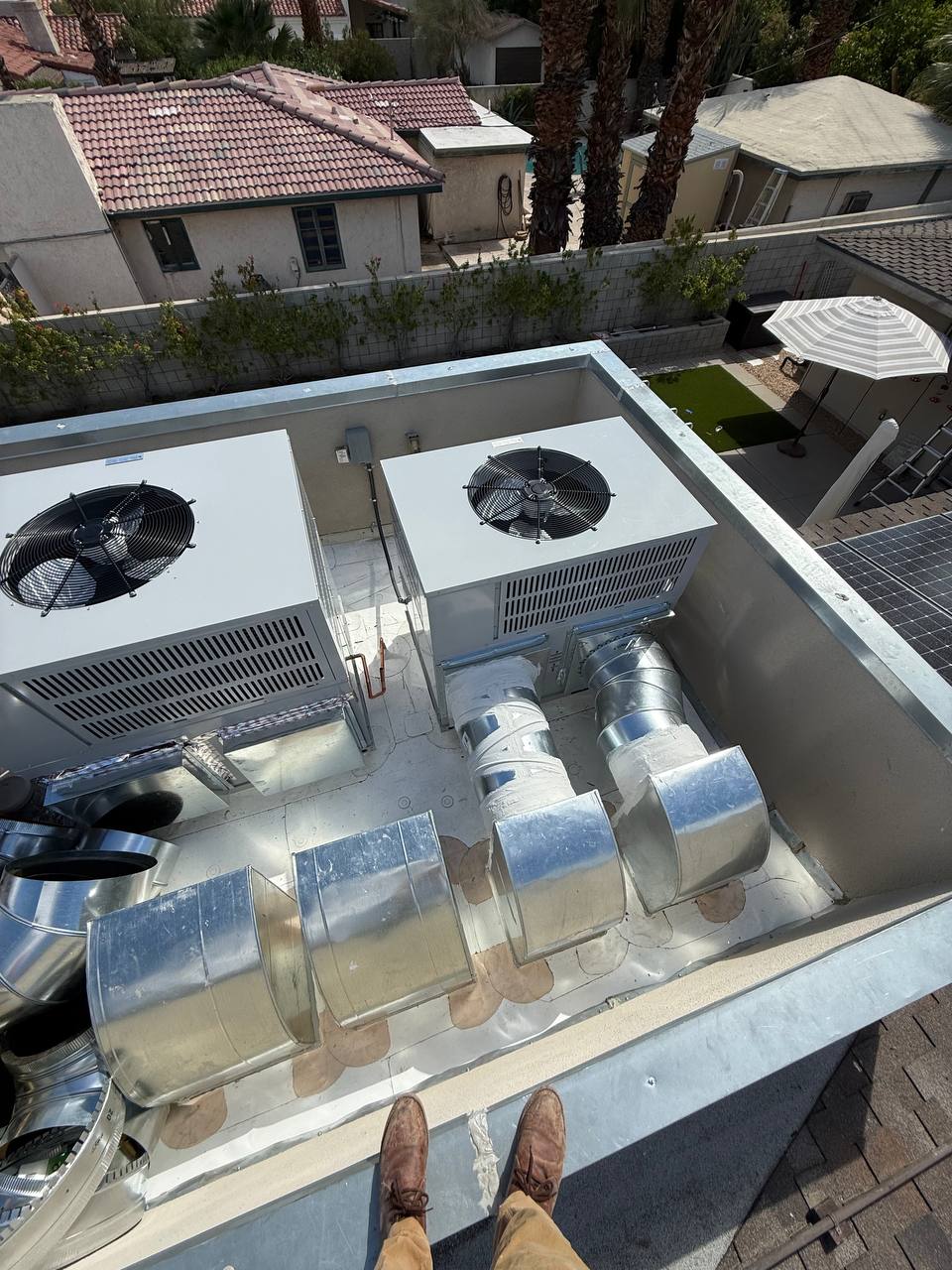
Imagine living with a roof leak for ten years. That was the reality for one Palm Springs homeowner — a house that was only about a decade old, yet plagued by persistent water intrusion. They had spent the better part of a decade going back and forth with roofing contractors, trying every patch and seal imaginable. Nothing worked. The roofer kept coming back, fixing "leaks" that would simply reappear, leaving the homeowner frustrated and exhausted.
When Cal West was called out for an estimate, we didn't just look at the ceiling — we looked at the source. After a thorough inspection of the rooftop infrastructure, Ethan realized the roofer was chasing a ghost. The problem wasn't the roofing material. It was the HVAC installation.
The Real Diagnosis
We identified three critical failures left behind by the original HVAC contractor:
1. Improper curb installation — water entry points around the unit curbs where the seal between unit and roof was compromised.
2. Undersized, kinked plenums — duct penetrations crammed into a tight attic space, too small and kinked, severely restricting airflow on both units.
3. Condensation overflow — both units showed signs of overflow, creating a consistent stream of water draining into the home.
The diagnosis was clear: no amount of new roofing would fix a fundamentally flawed mechanical setup. We needed to start from scratch.
The Custom Plenum Solution
The tight attic space was the biggest engineering challenge. Standard plenums wouldn't fit — we had to design custom high-flow plenums specifically built for those space constraints, maximizing airflow while eliminating the kinks that had been choking both systems for years.
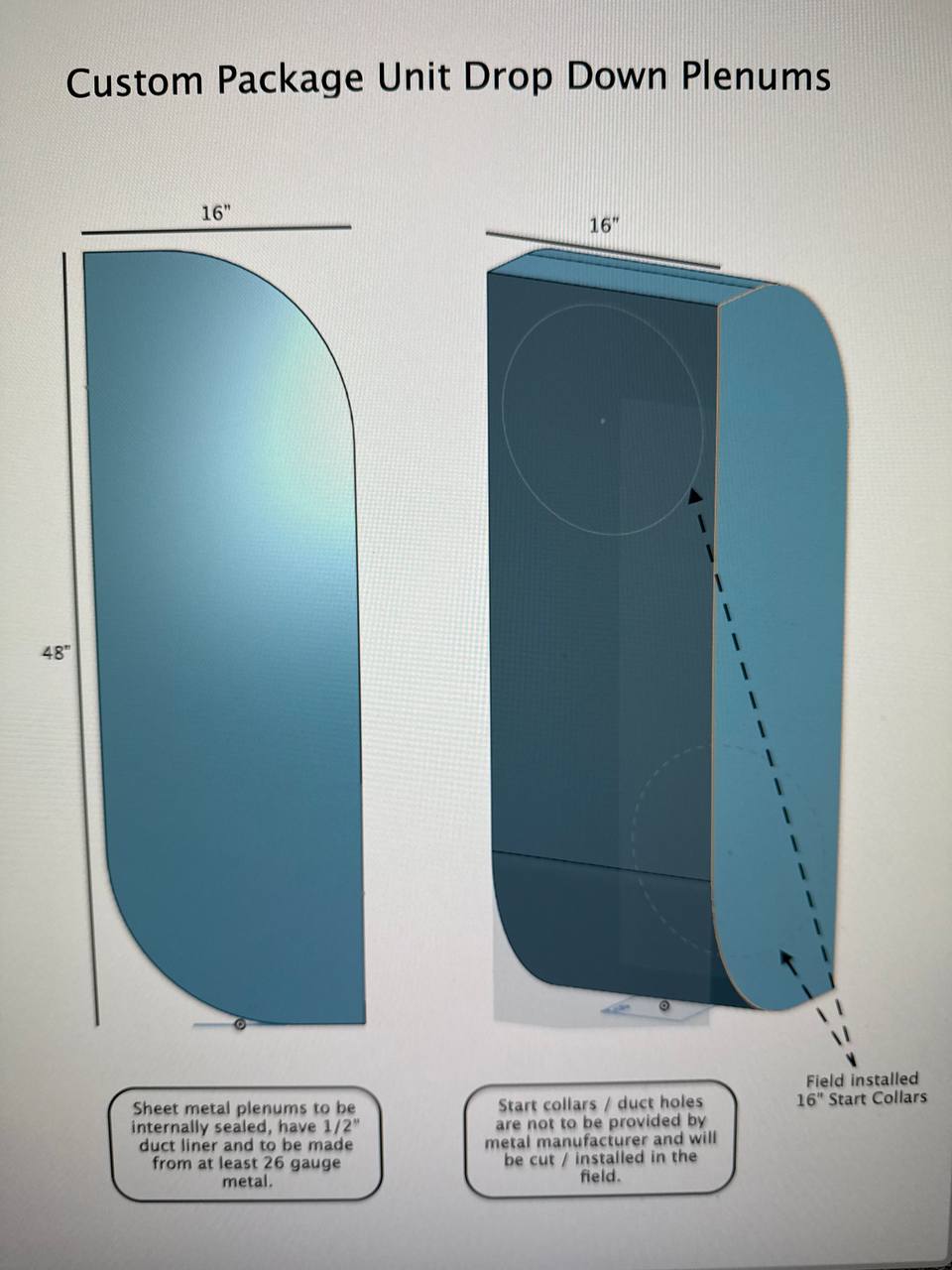
Custom CAD-designed plenums — 16"×48" drop-down design with rounded transitions and internal R-8 duct liner, engineered specifically for this attic space.
Full Tear-Out, Fresh Start
We stripped all existing rooftop HVAC infrastructure entirely. This wasn't a repair — it was a complete overhaul. New unit curbs, properly flashed and sealed. New duct penetrations. New drain lines. While we were up there, the homeowner had a new PVC roof installed on the flat section of the house, giving us a fresh, seamless foundation to work from.
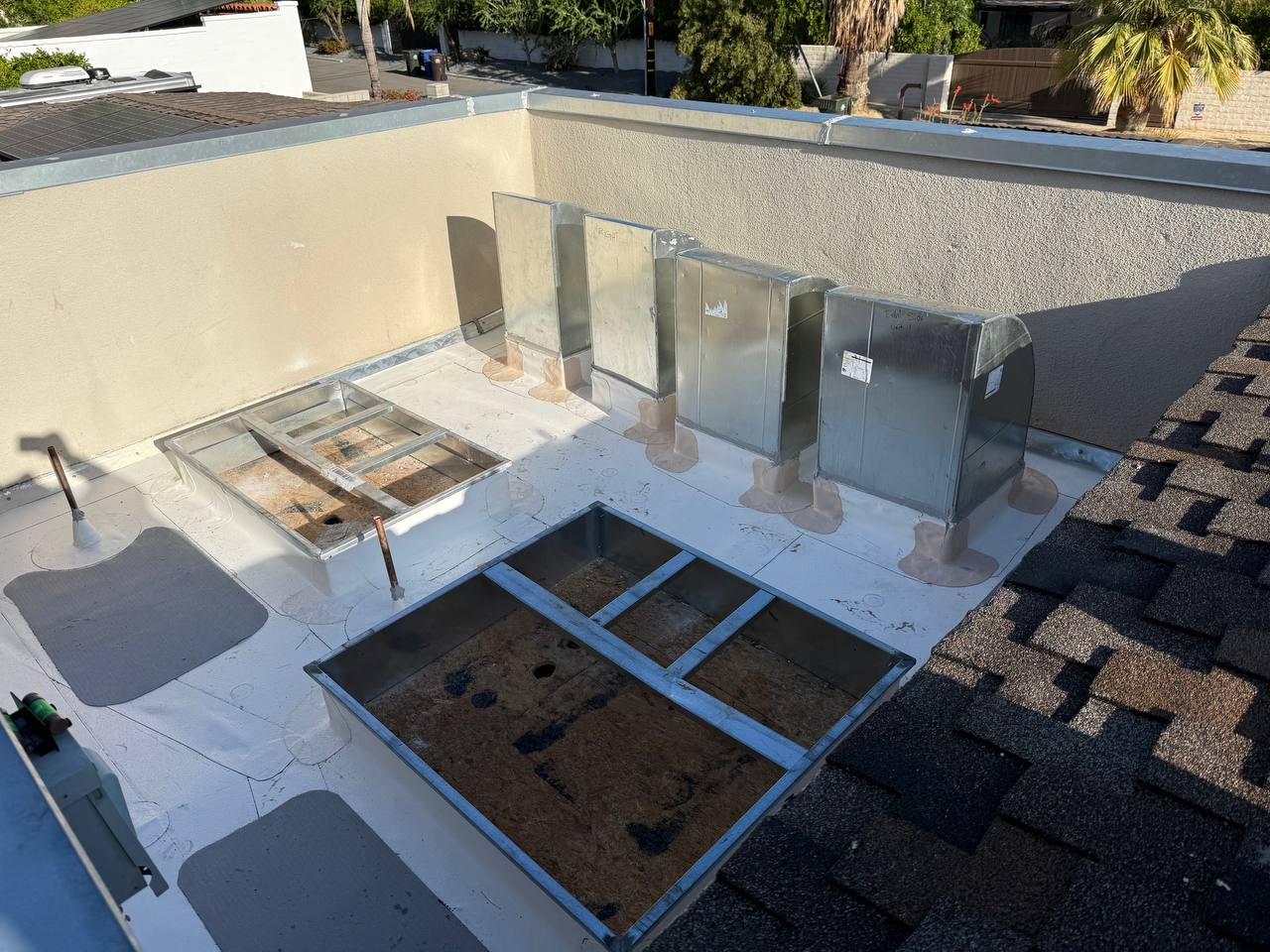
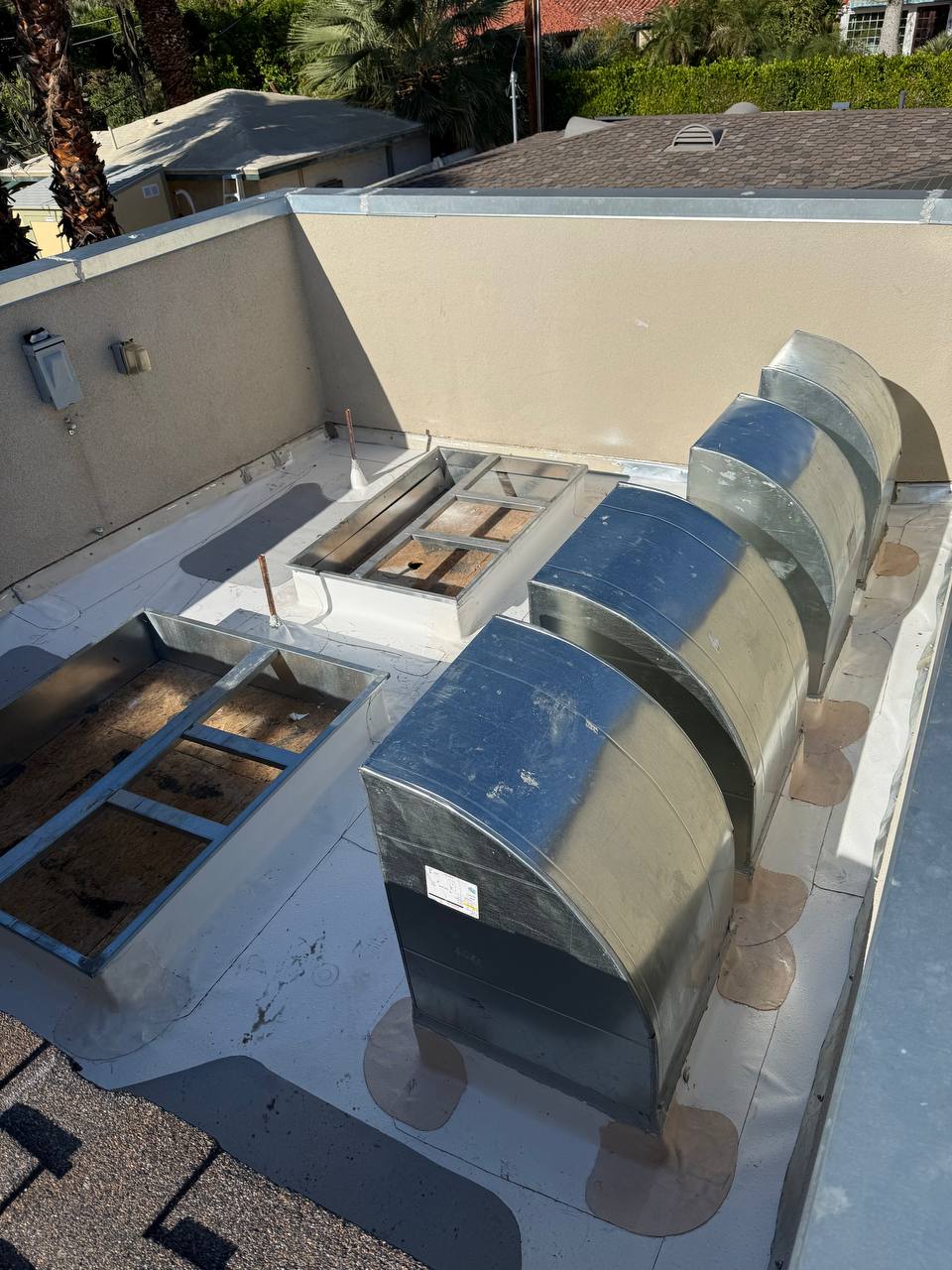
New unit curbs and custom plenum housings installed on the fresh PVC roof — a clean foundation compared to what we started with.
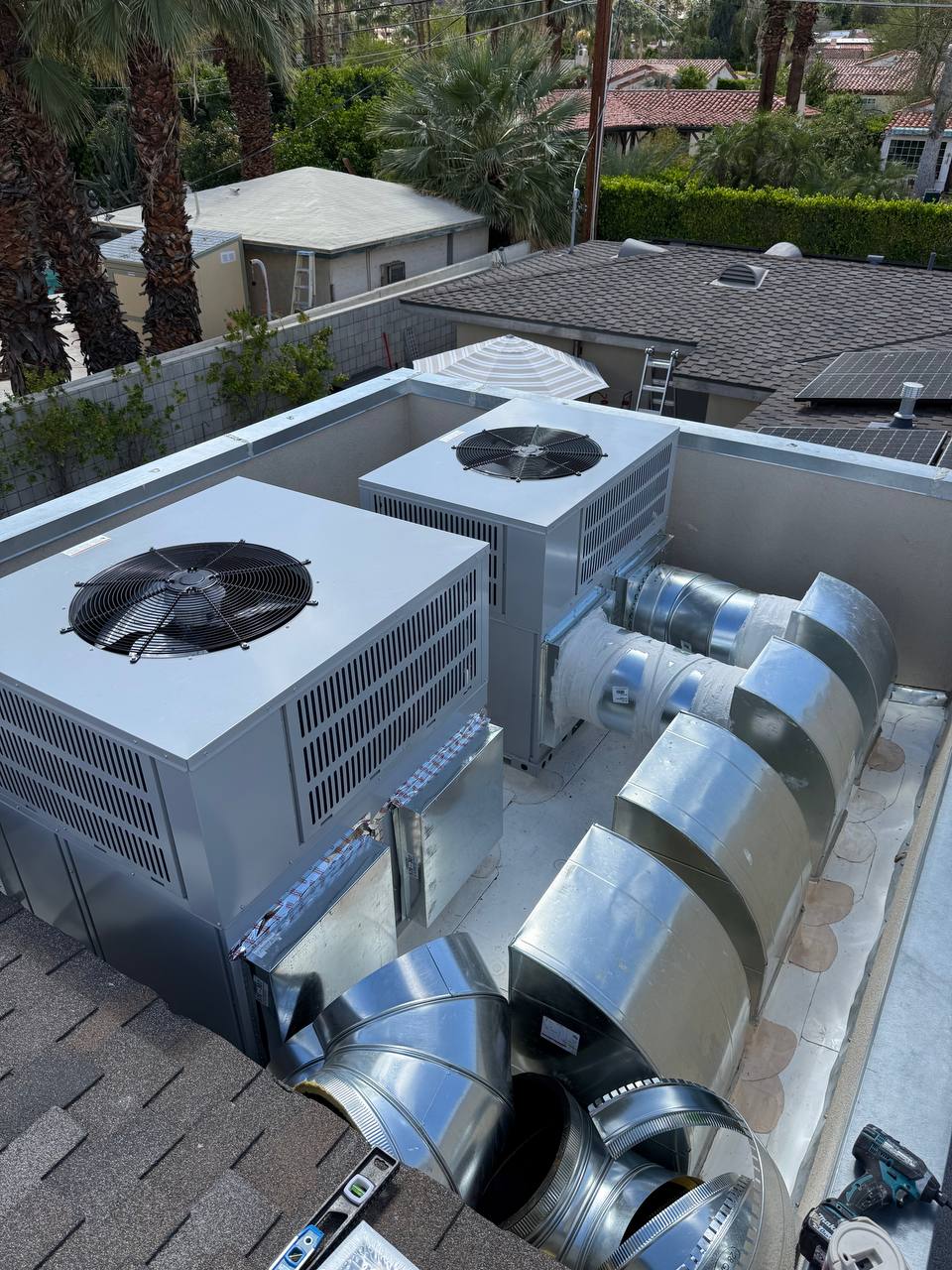
R-8 internally insulated ductwork being connected to the new plenums — properly sized this time, no kinks.
The Install
Two new Bosch IDP (Inverter Ducted Package) high-efficiency heat pump package units went in on the new curbs. The inverter-driven compressors ramp up and down based on demand rather than cycling on and off — more consistent temperatures, lower energy bills, and less mechanical stress on the system.
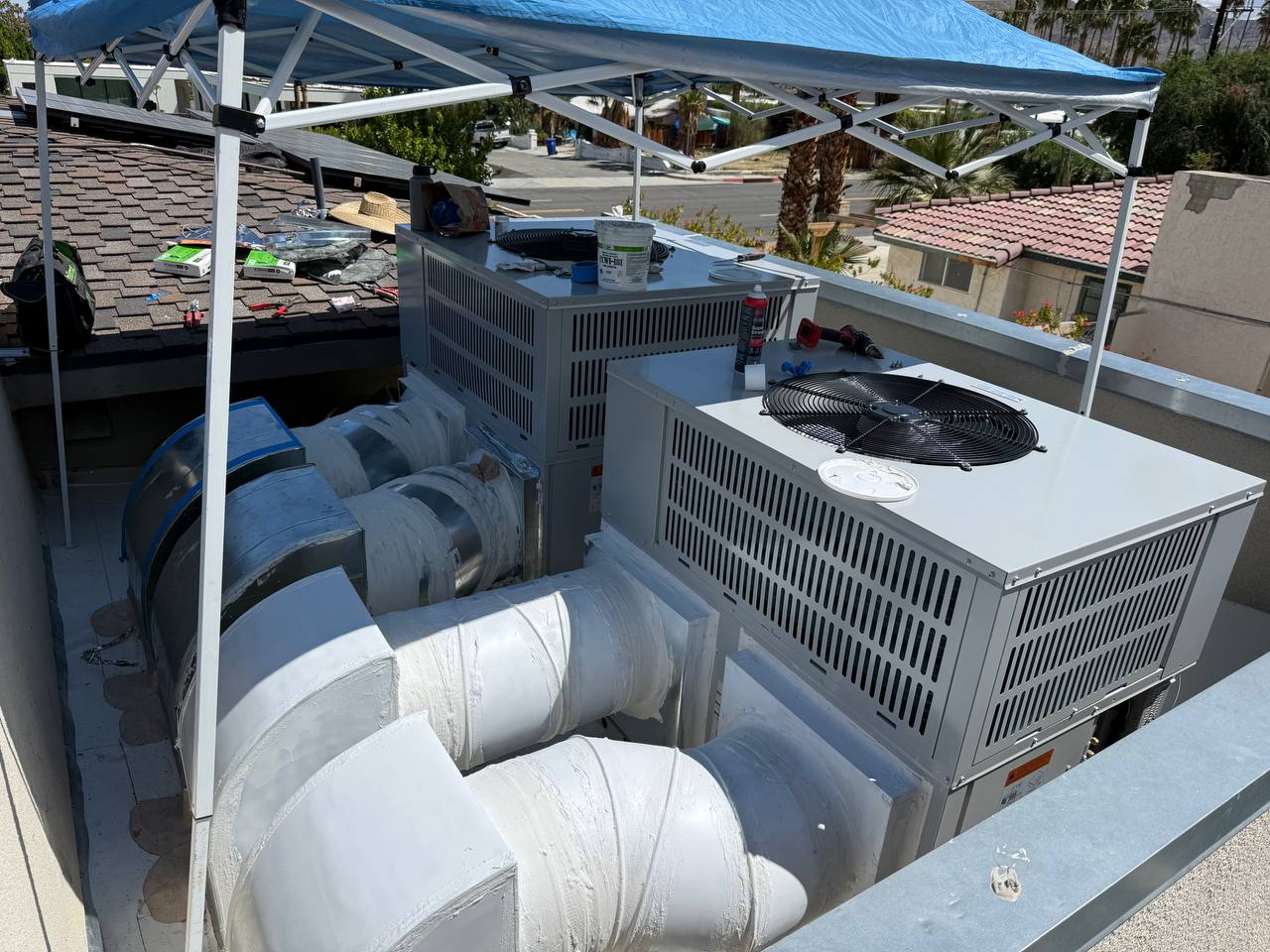
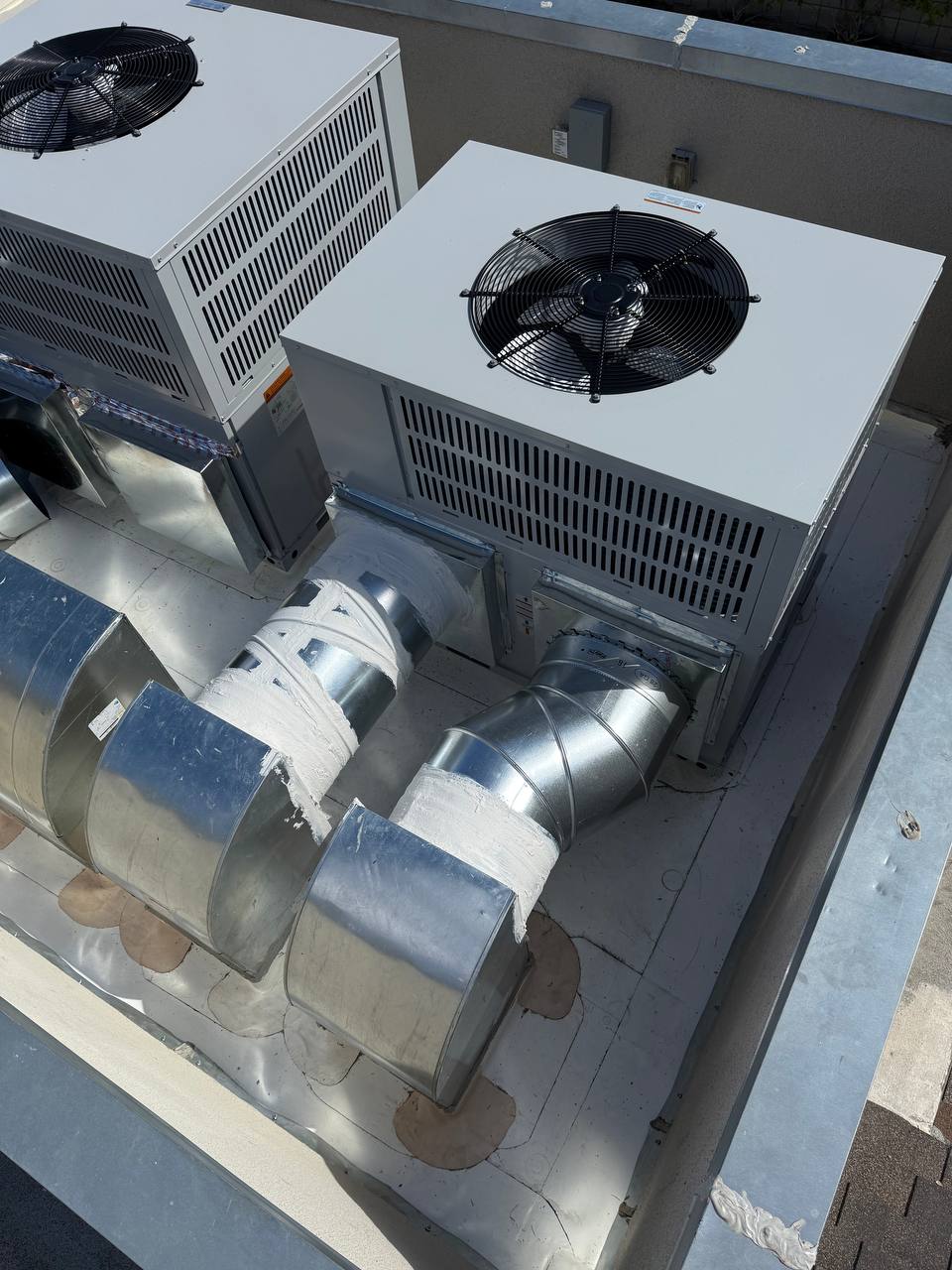
Install day — working under the shade canopy in full Palm Springs heat. Both Bosch IDP units set on new sealed curbs.
One Year Later
It has been a full year since the project was completed. Zero water leaks. Not a single drop. Beyond solving the leak, the airflow throughout the home is dramatically better than it ever was under the old, restricted system. The problem wasn't just patched — it was solved.
Sometimes the roofer isn't the problem. Sometimes you have to look at what's sitting on top of the roof.