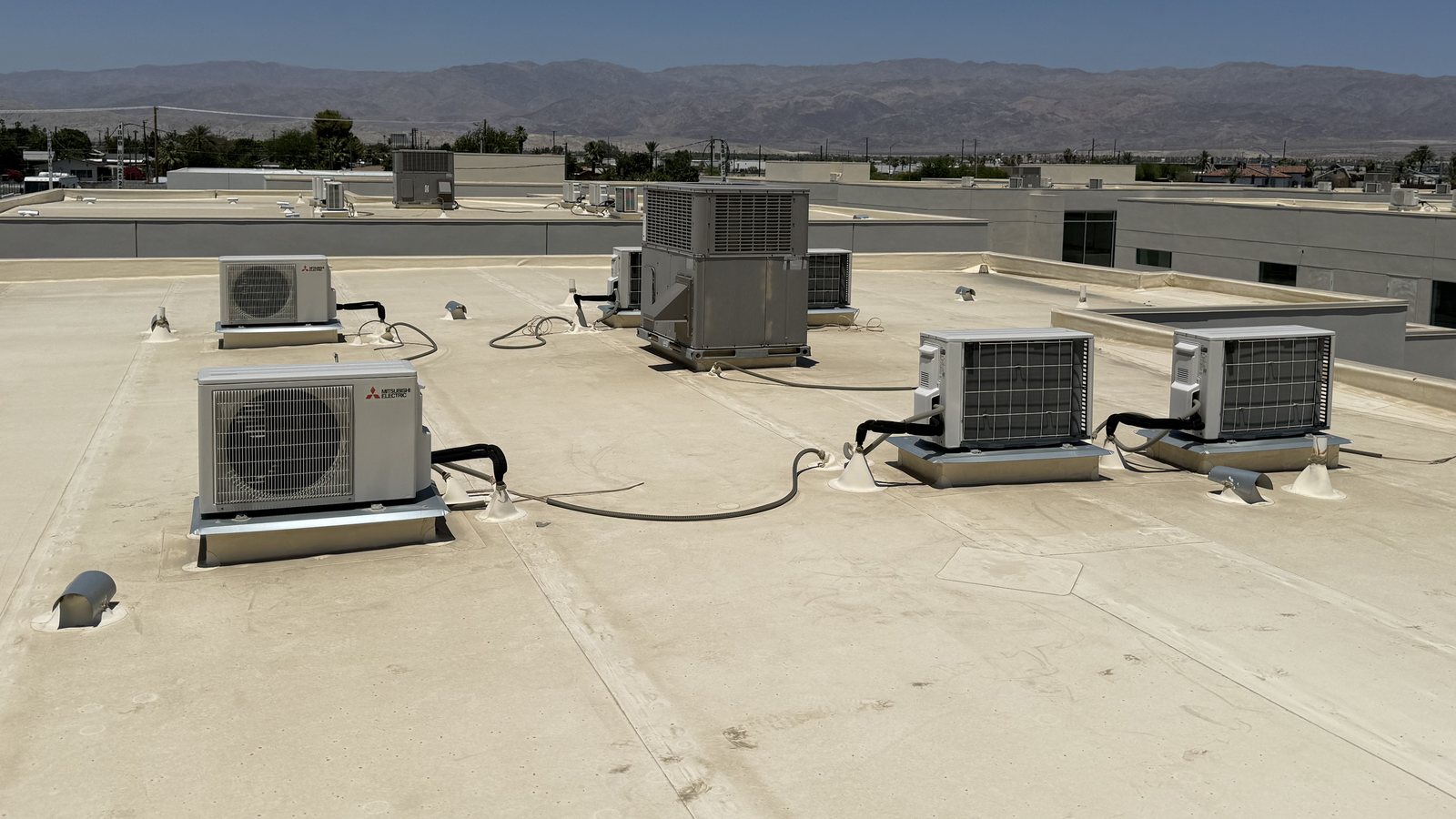
This week we started phase one of one of the more unusual projects we have taken on: a large hospitality development in the Coachella Valley that sat unfinished for several years.
Some of the guest buildings are nearly complete and already have ductless mini-split equipment in place. Other buildings are still open shells. Our job is to work through the property in phases, determine what can be saved, and install new systems where there is nothing worth recovering.
Starting With What Was Already There
The first buildings we entered had mini-split systems that were close to complete but had never been fully started. They had been sitting through years of desert heat, dust, and changing construction conditions.
Equipment can look fine from the outside and still have problems. Before startup, the refrigerant piping, drains, electrical connections, controls, and individual indoor units all have to be checked. The goal is to find problems before power is applied, not after.
Phase-one result: every mini-split unit we tested in the first two buildings came online. Both buildings ended the week with operating heating and cooling.
The First Startup Was the Big Unknown
Honestly, we expected at least a few failures. The systems had been sitting too long to assume everything would simply work.
Instead, the first unit started. Then the next one did. We kept moving through the buildings until every system we tested was operating. There is still inspection and finish work ahead, but getting both buildings running was a much better first result than we expected.
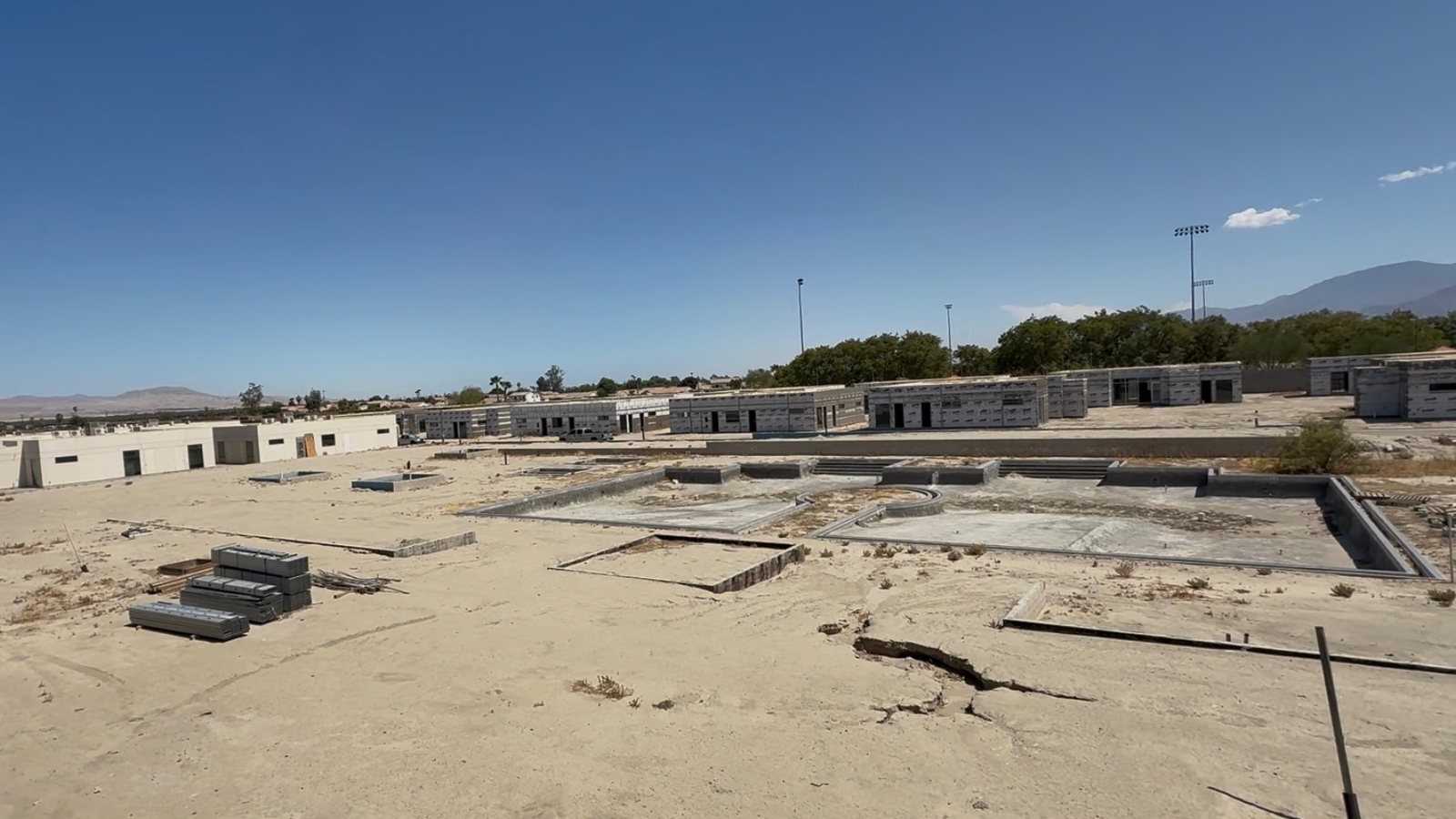
Guest buildings across the site are at different stages of completion as the project moves forward in phases.
Saving Equipment Where It Makes Sense
Replacing everything would be the simple answer, but it would not necessarily be the right one. If an existing system can be inspected, completed, and put into dependable service, saving it avoids wasting usable equipment and keeps the project moving.
That does not mean every system will automatically stay. Each building has to be evaluated on its own. The final decision depends on the equipment condition, how the original work was completed, and whether the system fits the way the space will be used.
Blank-Canvas Buildings Will Get New Ceiling Cassettes
The buildings that never received HVAC equipment give us a different opportunity. Because those interiors are still open, we can plan new ceiling-cassette mini-split systems around the final room layouts instead of trying to work around a finished ceiling.
Ceiling cassettes provide individual temperature control without putting a wall-mounted unit in every room. They also allow the equipment to sit cleanly within the architecture when the framing, condensate drainage, refrigerant piping, electrical work, and service access are coordinated early.
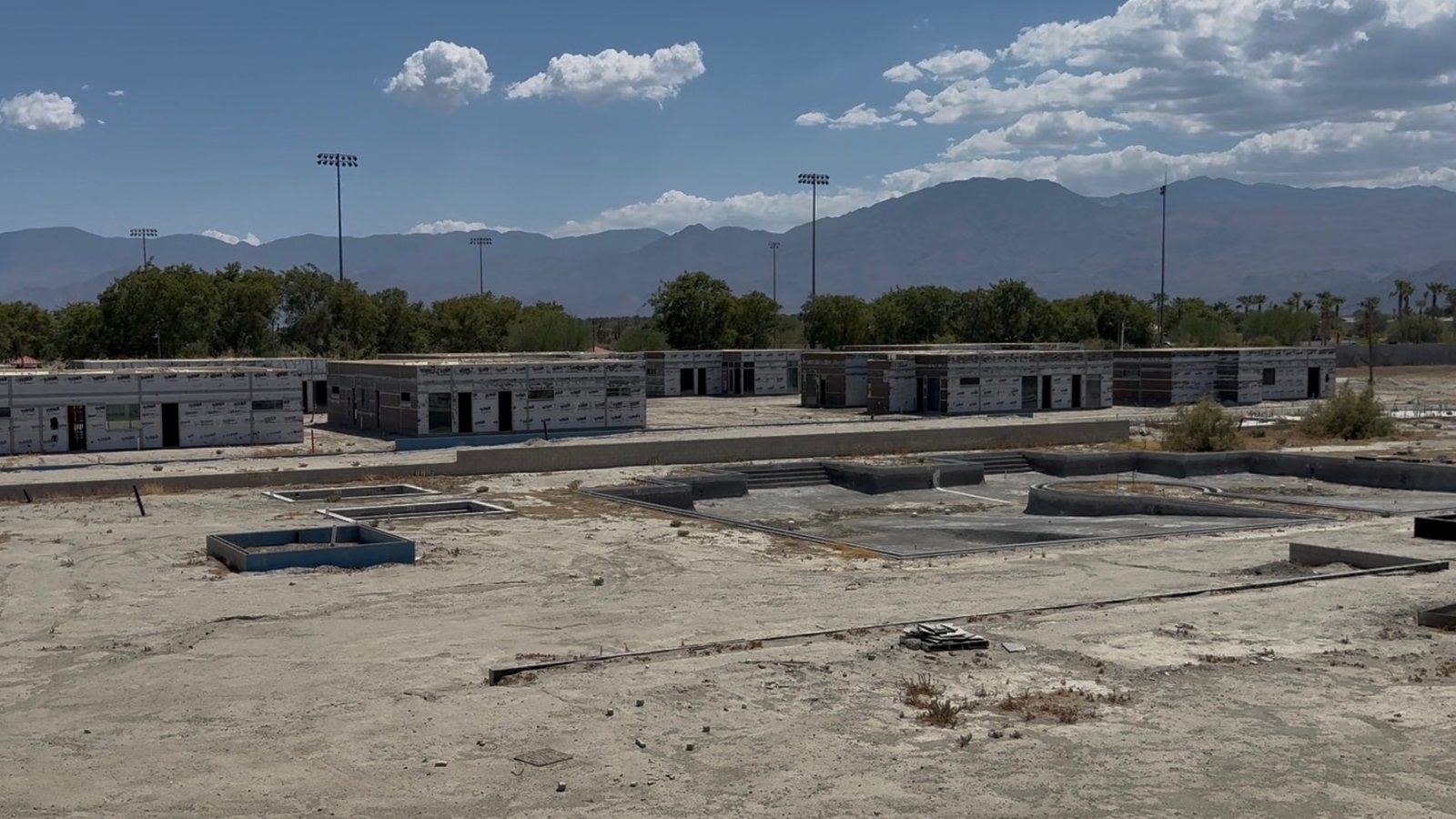
Some guest buildings remain unfinished, leaving room to coordinate new ceiling-cassette systems before the interiors are closed.
A Good First Week, With Plenty Left to Do
There is a lot of work ahead at this property, but phase one started about as well as it could have. Two buildings that sat just short of completion for years now have operating HVAC systems.
We will be back for the next phase soon. As the work continues, we will share more of the recovery process, the new ceiling-cassette installations, and the decisions that go into finishing a project that has been waiting years to move again.